
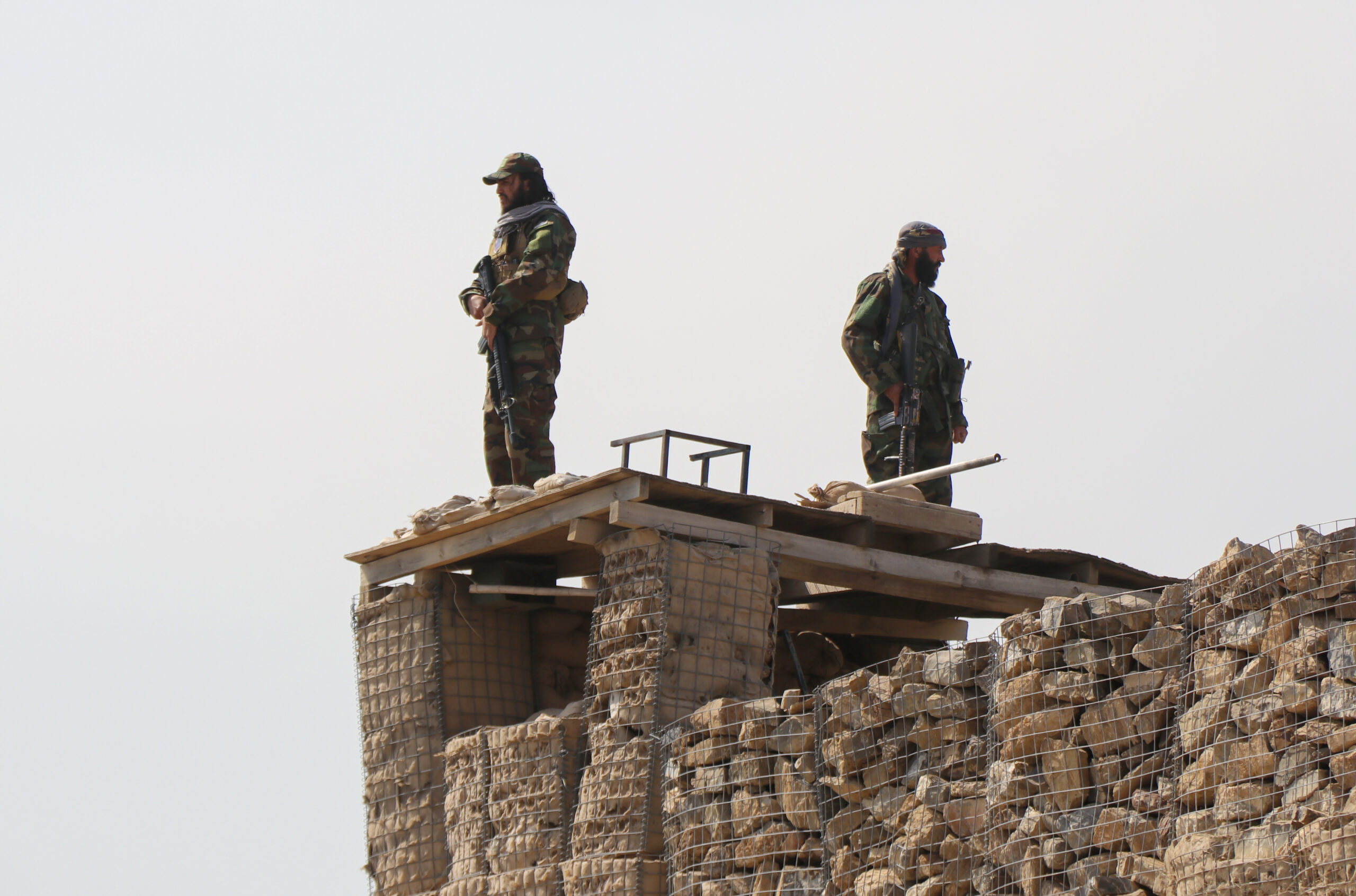
Washington, Nov 28 (SocialNews.XYZ) Pakistan’s long-standing pursuit of strategic depth in Afghanistan has backfired, creating serious security challenges for Islamabad, a report has stated. It noted that the country must now address not only the consequences of its failed Afghanistan policy but also the institutional thinking that shaped it.
For Europe, the risk of this fallout developing into a wider regional security crisis has become a direct strategic concern rather than a distant foreign-policy issue, according to a report in Pressenza – International Press Agency.
“The latest escalation between Pakistan and Afghanistan exposes a strategic failure that Islamabad can no longer contain through military pressure or diplomatic manoeuvring. The return of the Taliban to power in 2021 did not deliver the strategic alignment Pakistan had anticipated. Instead, Islamabad now faces an increasingly autonomous Afghan leadership, a resurgent Tehrik-i-Taliban Pakistan (TTP) and growing insecurity along its western border. The central paradox is difficult to ignore: the strategic depth Pakistan sought in Afghanistan may have become one of its greatest strategic vulnerabilities,” the report detailed.
Highlighting the escalating tensions, it stated that an exchange of fire between Pakistani and Afghan border forces on November 1, 2026 forced the strategically significant Torkham crossing to shut for nearly five hours.
The report flagged Islamabad’s apparent double standard, noting that Pakistan insists on respecting Afghanistan’s sovereignty and preventing militant attacks from its territory, while its own historical approach has involved repeated efforts to shape Kabul’s internal political landscape.
“Pakistan’s military establishment has exercised considerable influence over regional policy for decades, yet the strategic costs have rarely produced a fundamental reassessment. It cannot indefinitely claim the benefits of past interventions while treating their consequences as exclusively external security problems. A credible change of course requires more than military adjustments along the Afghan border: it demands a reassessment of the strategic doctrines that made the pursuit of strategic depth possible,” it mentioned.
According to the report, Pakistan-Afghanistan tensions are not confined to border disputes. Prolonged instability could trigger further displacement, hamper regional trade and provide fertile ground for extremist groups, posing wider security challenges for Europe, including terrorism, organised crime, drug trafficking and migration.
“Pakistan now confronts the long-term costs of a security doctrine that repeatedly treated militancy as an instrument of statecraft. Its military establishment helped cultivate a regional political environment that it can no longer control. Military pressure may demonstrate resolve or temporarily disrupt militant networks, but it cannot resolve the underlying political contradictions. Without verifiable security arrangements, sustained diplomacy, and a fundamental reassessment of its Afghanistan policy, Pakistan risks remaining trapped in a cycle of retaliation and instability,” the report noted.
Source: IANS

About Gopi
Gopi Adusumilli is a Programmer. He is the editor of SocialNews.XYZ and President of AGK Fire Inc.
He enjoys designing websites, developing mobile applications and publishing news articles on current events from various authenticated news sources.
When it comes to writing he likes to write about current world politics and Indian Movies. His future plans include developing SocialNews.XYZ into a News website that has no bias or judgment towards any.
He can be reached at gopi@socialnews.xyz