
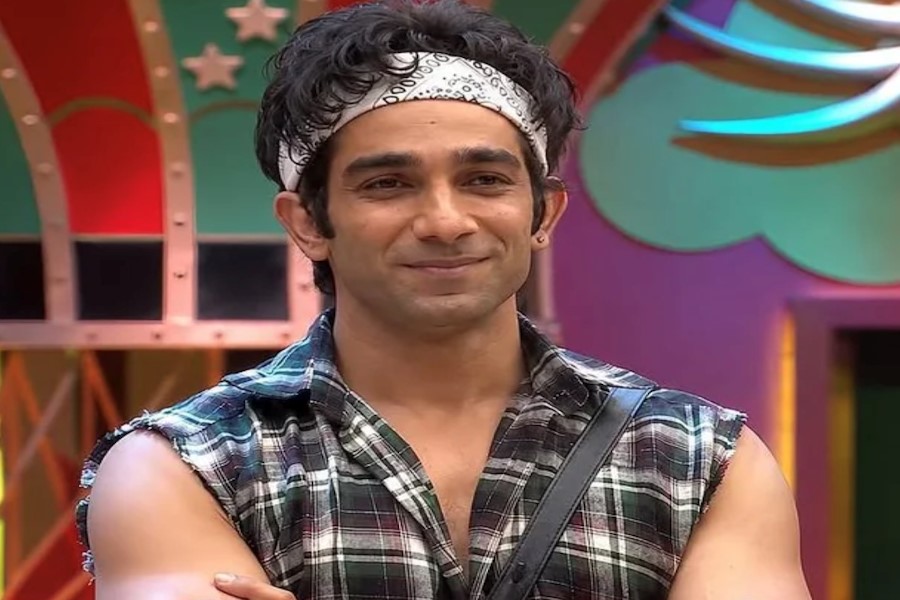
Speaking about his eviction, Aman admitted that he could not express himself as naturally as he would have liked. He explained that people who know him personally also felt that the personality they were familiar with was missing from his appearance on the show.
“I couldn’t really express myself well. Based on my own personality—both how I see myself and how others who know me perceive me—everyone has said the same thing: that ‘Aman’ was missing. The ‘real’ Aman didn’t really come through. Even while I was inside, I kept wondering, ‘Aman, why aren’t you doing the things that people actually like you for? Why isn’t it happening?’ I think the immense pressure, a bit of negativity, and a whole mix of other factors just weigh you down—sometimes you don’t even realize it. Plus, with so much happening inside, I just couldn’t open up. I do regret not being able to express myself.”
The actor's admission highlights the emotional challenges that can accompany life inside the Bigg Boss house. With constant scrutiny, unpredictable confrontations and the pressure to remain visible, contestants often struggle to find the right balance between being themselves and playing the game. For Aman, the biggest disappointment appears to be that viewers did not get to see the personality his friends and family recognise outside the show.
When asked who he wanted to see win Bigg Boss, Aman named Arish, Uditi and Kazi as contestants who remain especially close to his heart. However, he expressed reservations about Uditi's chances of surviving until the final stages, despite believing she possesses considerable mental strength.
“Well, Arish, Uditi, and Kazi—these three are very close to my heart. The reason I hesitate to name Uditi as a potential winner is that, based on my understanding of the house and the kind of person she is, I don’t think they’ll let her stay for long. If she manages to make it far, it would be a huge surprise—and a great achievement for her—because she is incredibly strong; mentally, she’s very, very strong. It’s just that she’s never been in an environment like this or around these kinds of people, so she sometimes struggles with how to handle certain situations. But in terms of the game, she has a good grasp of things and is mentally quite resilient. She might make it a bit further, but I’m not sure if they’ll actually let her last that long.”
Aman's comments suggest that he distinguishes between understanding the game and navigating the social dynamics inside the house. While he considers Uditi smart and mentally resilient, he believes her limited experience with such an intense environment could make her journey more challenging. His assessment also reflects his concern about how the house's dynamics might influence her future in the competition.
Uditi's captaincy reportedly changed the way some viewers perceived her, with criticism emerging over her decisions and relationships. The discussion also touched on accusations that Aman himself was selfish and on the deterioration of his relationships with Kaziya and Mahi-ji. Responding to the broader question of selfishness inside the house, Aman argued that contestants ultimately have to prioritise their own game.
“But the game is all about being selfish, isn’t it? That’s how it works there. I don’t know why people go in there making such grand declarations of friendship—promising to be ‘brother and sister,’ or acting like ‘mom, dad, uncle, and aunt’ to each other. Ultimately, everyone is going to play the game selfishly. I once asked Young, ‘Scout keeps going on about friendship—if it came down to the end and Salman Sir asked him to hand over the trophy for the sake of friendship, would he actually do it?’ It’s fine to be friends—you can maintain that friendship outside the game too—but inside, everyone is bound to be selfish. Udit, for one, understands the game; she’s a smart girl.”
Aman's argument centres on the difference between genuine personal bonds and competition-driven decisions. According to him, friendships can continue outside the show, but contestants must eventually make choices that benefit their own journey. His remarks also raise an interesting question about reality television: how much can relationships survive when every decision could affect someone's chances of winning?
Aman was also asked whether Scout was surrounded by the right people inside the house. Reflecting on his experience as a contestant and comparing it with his impressions after eviction, the actor made his position clear.
“No, he’s a bad fit for that group. While I was inside, I felt that we were the positive ones, and they were the negative ones. And once I came out, it turned out that was exactly the case. My intuition was right—they are a bit negative, a bit… strange.”
The remark reveals that Aman's opinion of the house's social groups has remained largely unchanged since his exit. His comments also underline how alliances and group dynamics can shape a contestant's experience, influencing everything from everyday conversations to major disagreements. However, such assessments remain his personal interpretation of the relationships inside the house, and other contestants or viewers may see the same dynamics differently.
The conversation also turned to the heated confrontation between Nakul and Gullu, with Aman asked to identify who he believed was in the wrong. Rather than focusing on the personal differences between the two contestants, he drew a distinction between verbal aggression and physical contact.
“Look, the person who raised their hand first is in the wrong—both technically and legally. He shouldn’t have raised his hand. If they had just bumped chests, it would have been more interesting to watch—that kind of intensity is part of the game—but the moment a hand was raised, the game effectively came to an end.”
Aman's response suggests that he sees confrontations as part of the reality show's competitive atmosphere but believes physical aggression crosses an important line. His comments also reflect the tension between entertainment and acceptable behaviour in a closely watched reality competition. While arguments can become dramatic television, physical escalation changes the nature of the conflict entirely.
Aman Gandhi's post-eviction reflections offer a candid look at his experience inside the Bigg Boss house. From regretting his inability to show his real personality to defending the role of selfishness in the game, the actor has shared his perspective on some of the season's most debated dynamics. His support for Arish, Uditi and Kazi, criticism of Scout's group and response to the Nakul-Gullu confrontation reveal a contestant who has continued analysing the game even after leaving it.
Ultimately, Aman's biggest regret appears to be that the audience did not get to see the person he believes he truly is. Whether viewers agree with his assessment of the remaining contestants or not, his comments add another perspective to the ongoing conversations surrounding Bigg Boss 20. With the competition continuing inside the house, fans will be watching to see how the relationships, alliances and rivalries develop from here.

About Newshelpline
News Helpline is a Brand in the world of daily Bollywood Content. We are a team of Innovative, Hard working and Creative people working in media since last 15 years. We were the first to sense the changing phase of News Industry with the progress of IT industry. Hence in the year 2008 we came up with a first of its kind Bollywood News Application, a website where we uploaded Bollywood news on daily basis and our client could download this news from anywhere in the world on the same day of the event. Then with the passage of time we improved and evolved. The result is today our client in any area of the world receives their Bollywood news (HD quality) within 2-3 hrs. post event. The value of News is very Time dependent and we at News Helpline deliver the News before thay become rumors.