
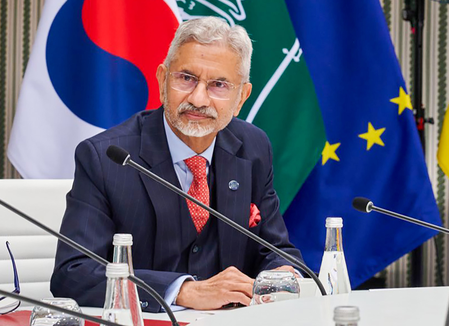
New York, Sep 29 (SocialNews.XYZ) Disruptions to grain shipments and fertiliser production could lead to a major food crisis in the coming months, External Affairs Minister S. Jaishankar warned in New York, saying conflicts were already putting severe pressure on developing countries.
At an event in New York, EAM Jaishankar linked the risk to strains on energy supplies, grain exports, fertilisers and finance. He said the effects of the Ukraine conflict and the Iran-Gulf conflict were being felt far beyond the countries directly involved.
“We are already looking at major significant fertilizer shortages,” he said. Some major grain exporters would also be unable to send shipments, particularly through the Black Sea, he added.
“So there is gonna be a major, food crisis probably, you know, in the coming months,” EAM Jaishankar said. His remarks presented the crisis as a risk, rather than an outcome that had already occurred.
Energy is another concern. The market was tight, and political decisions affecting oil supplies could drive prices higher when countries needed stability, he said, and described the security of supply and the politics surrounding it as connected pressures.
The consequences did not end with higher prices. EAM Jaishankar said conflicts also drew money towards safer destinations and away from the Global South. Countries facing simultaneous pressure on food, fuel, fertilisers and finance had less room to absorb another shock.
He said policymakers could not dismiss the damage to other countries as unintended. They had a responsibility to consider the wider consequences of their decisions, he argued.
“Countries should not be so self-centered that you’re in your own world and take your decision,” EAM Jaishankar said. Leaders needed to understand how their actions would affect people elsewhere, particularly in countries with fewer resources to respond.
The minister also warned against allowing vulnerable states to fall into deep distress. He said past breakdowns in governance had come at a cost to global security, and meeting basic needs was a matter of common sense as well as solidarity.
India felt a particular connection with developing countries as a post-colonial society, he said. But he argued that wealthier countries also had a practical interest in preventing instability. He pointed to the political effects of economic stress in India’s neighbourhood after the Ukraine war.
EAM Jaishankar made the remarks during a discussion of the pressures facing countries that seek to preserve their independence amid competition among larger powers. Some would be able to maintain that autonomy more easily than others, he said. Their choices would depend on the issue and the stakes involved.
In his opening remarks, EAM Jaishankar described food, fuel, fertilisers and finance as a four-part crisis facing much of the world. He also said progress towards the Sustainable Development Goals was falling behind, adding to the strain on countries already exposed to conflict and supply disruptions.
The United Nations adopted the Sustainable Development Goals in 2015 as a framework for progress on poverty, health, education and other priorities by 2030.
Food and energy shocks can affect importing countries even when they are far from a conflict. Changes in supply, transport and financing can raise costs across international markets.
Source: IANS

About Gopi
Gopi Adusumilli is a Programmer. He is the editor of SocialNews.XYZ and President of AGK Fire Inc.
He enjoys designing websites, developing mobile applications and publishing news articles on current events from various authenticated news sources.
When it comes to writing he likes to write about current world politics and Indian Movies. His future plans include developing SocialNews.XYZ into a News website that has no bias or judgment towards any.
He can be reached at gopi@socialnews.xyz