
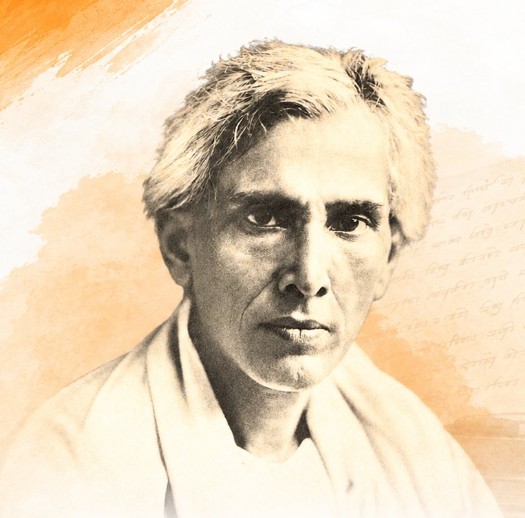
New Delhi, Sep 15 (SocialNews.XYZ) One hundred and fifty years is a long time – with radical changes, where society and the surroundings have been remodelled, especially with the advent of technology – yet Sarat Chandra Chattopadhyay’s literary creations remain as relevant today.
From the black-and-white era of K. L. Saigal to Sanjay Leela Bhansali’s grandeur of Devdas, enacted by Shah Rukh Khan, to the rendition of Parineeta from Bimal Ray to Pradeep Sarkar, cinematic adaptations of his novels further ensured that his stories remain alive in popular culture.
Sarat Chandra’s narratives may have been reshaped to suit changing tastes, yet the emotional core is not lost. Directors like Gulzar, Hrishikesh Mukherjee, and Basu Chatterjee also found in his works a treasure trove of human drama, while filmmakers like Anurag Kashyap reimagined them to reflect contemporary urban angst, as in Dev D. This adaptability is a testament to the universality of his themes, and his writings remain just as popular.
He wrote about ordinary men and women, their joys and sorrows, their compromises and rebellions. In doing so, he provided dignity to lives often overlooked. His prose, simple yet evocative, carried the weight of lived experience, making his stories accessible to readers of all backgrounds. His feminist themes come out as empathetic portrayal of women who, despite being bound by patriarchal structures, assert emotional autonomy and moral strength.
Sarat Chandra was born on September 15, 1876, in Debanandapur village of West Bengal’s Hooghly district. The heroines in his works, like Lalita in Parineeta, Paro in Devdas, and Kiranmayi in Charitraheen, all exhibit resilience and strength. Sarat Chandra wrote at a time when Bengal was caught between feudal traditions and the stirrings of modernity. His novels reflect that tension, especially the way women were treated.
Scholars argue that Sarat Chandra’s women claim autonomy not through overt rebellion, but through inner resilience, emotional intelligence, and moral clarity, making such themes enduring and realistic. Not all were confined to romance or domestic drama.
Pather Dabi, published in 1926, was so politically charged that it earned the ire of the British colonial government of the time. The novel’s revolutionary undertones, its call for resistance against oppression, and its portrayal of youthful idealism made it a rallying cry for many. Such writing reflected nationalist consciousness, critiques of imperialism, calling for social reform, making him not only a literary figure but also a subtle political voice of colonial India. Pather Dabi was thus banned by the British for its revolutionary content.
Sarat Chandra lived through a period when Bengal was at the heart of India’s nationalist awakening. His empathy for the oppressed extended beyond domestic struggles to the collective suffering under colonial rule. The Bengali novelist and short story writer’s works are deeply rooted in the social fabric of the region, yet they speak of universal human emotions.
Srikanta, a narrative penned over several years, explores the wanderings of its protagonist and offers a philosophical reflection on freedom, morality, and the search for a meaning. His writings remain strikingly relevant. Issues like child marriage, dowry, and widow marginalisation may have diminished, but gender inequality persists in new forms.
Sarat Chandra’s insistence on recognising women’s inner strength and emotional autonomy matches contemporary debates about empowerment and intervention. With that, he challenged the patriarchal norms of his time and created narratives that remain in the centre of ongoing struggle for gender equality.
Interestingly, Sarat Chandra is said not to have been a radical reformist in his personal life. He upheld certain traditional Hindu practices and caste norms, which sometimes limited the scope of his political radicalism. His novels, however, consistently highlighted the injustices of patriarchy, caste prejudice, and colonial exploitation.
Source: IANS

About Gopi
Gopi Adusumilli is a Programmer. He is the editor of SocialNews.XYZ and President of AGK Fire Inc.
He enjoys designing websites, developing mobile applications and publishing news articles on current events from various authenticated news sources.
When it comes to writing he likes to write about current world politics and Indian Movies. His future plans include developing SocialNews.XYZ into a News website that has no bias or judgment towards any.
He can be reached at gopi@socialnews.xyz