
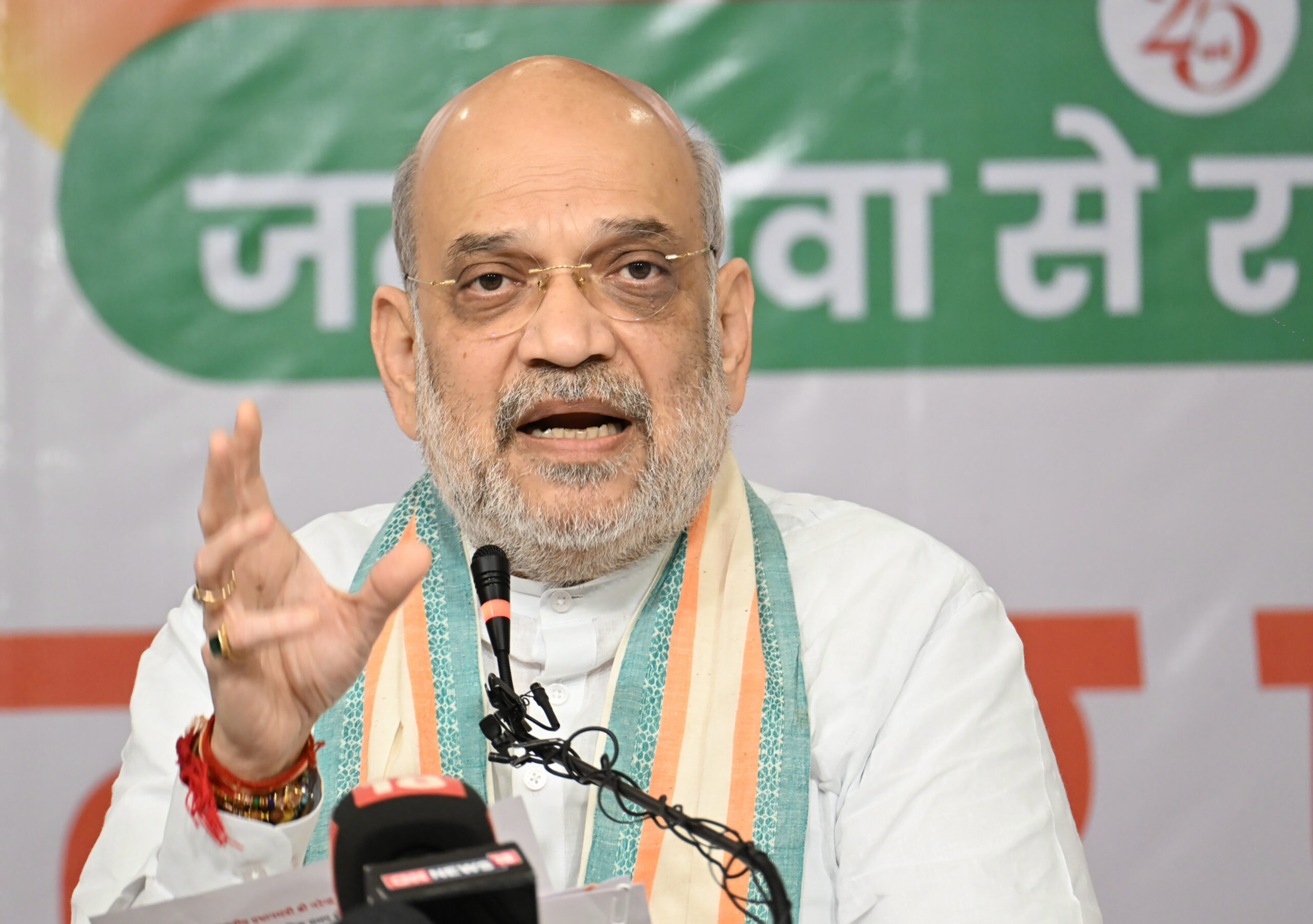
Jaipur, Sep 15 (SocialNews.XYZ) Aiming at pushing the long-pending water projects in North India, an MoU for the Kishau Multipurpose Project was signed on Tuesday in New Delhi among six participating states at a meeting chaired by Union Home Minister Amit Shah.
Chief Minister Bhajanlal Sharma, along with the Chief Ministers of the other participating states, signed the MoU in the presence of Union Minister for Jal Shakti, C.R. Patil.
The Kishau project is expected to play an important role in addressing the water requirements of Rajasthan’s water-scarce Shekhawati region, particularly Sikar, Churu and Jhunjhunu. The Kishau Multipurpose Project is proposed on the Tons River, a major tributary of the Yamuna, along the border of Uttarakhand and Himachal Pradesh.
With an estimated cost of approximately Rs 15,000 crore, the project will generate 660 MW of hydroelectric power and benefit Rajasthan, Uttarakhand, Himachal Pradesh, Delhi, Uttar Pradesh and Haryana.
Under the revised arrangement, a portion of Himachal Pradesh’s allocated water share will be made available to Rajasthan and Delhi.
In return, the states concerned will contribute towards the cost of the power component associated with Himachal Pradesh. The Central Government will provide 90 per cent of the cost of the water component as assistance, while the participating states will contribute the remaining 10 per cent. The Government of India has included the Kishau Dam Project in the list of National Projects.
Construction, operation and maintenance of the project will be undertaken by Kishau Corporation Limited, with monitoring carried out under the established framework for the Upper Yamuna Basin.
Under the project, 124 million cubic metres (MCM) of water allocated to Rajasthan from the Kishau Dam is proposed to be conveyed to Churu through Haryana’s Hansi-Butana system using three underground pipeline systems.
This water will help meet the drinking water and other requirements of Sikar, Churu, Jhunjhunu and surrounding areas.
The project is expected to provide a major boost to the region’s long-term water security and create new opportunities for development. Regular and adequate water availability will not only improve access to drinking water but also support irrigation and contribute to improvements in the region’s social, educational, economic and health indicators.
The Kishau project will further strengthen the state government’s ongoing efforts to secure water for the Shekhawati region.
Under the Yamuna Water Agreement, consensus has been reached among the states concerned to prepare a joint Detailed Project Report (DPR) for bringing water to Rajasthan through underground pipelines to meet the drinking water requirements of Sikar, Churu, Jhunjhunu and other areas.
The revised Kishau MoU will provide further strength to this water-supply system. The water made available through the project will be utilised for drinking, irrigation and other beneficial purposes.
The revised agreement places special emphasis on Rajasthan’s interests. Under the arrangement, 95 per cent of the relevant water share will be made available to Delhi and Rajasthan, while Himachal Pradesh will retain 5 per cent for local use.
Of the 95 per cent share, the allocation between Delhi and Rajasthan will be in the ratio of 75:25.
The agreement is expected to provide Rajasthan with a stronger foundation for addressing the water requirements of its water-deficient regions. The Kishau project is being viewed as an important component of the broader development strategy for Shekhawati.
Along with water security, the state government is focussing on connectivity, tourism, heritage conservation and air connectivity in the region.
The Yamuna Water Agreement, efforts to preserve historic havelis and Shekhawati’s rich cultural heritage, expressway and highway projects, and proposed air connectivity initiatives in Sikar and Jhunjhunu are expected to collectively accelerate regional development.
Improved water availability, combined with better road and air connectivity, tourism and heritage conservation, will create new opportunities for employment, investment and economic growth.
The integrated development of the region is also expected to provide greater opportunities for the youth of Shekhawati within their own region.
The state government is implementing several initiatives aimed at strengthening water security in Rajasthan, including the Ramjal Setu Link Project, with the objective of ensuring drinking and irrigation water availability across the state.
Under the Yamuna Water Agreement signed by five states in 1994, Rajasthan was allocated 1,917 cusecs, equivalent to 577 MCM, from the Tajewala Head during the monsoon season. However, due to the absence of the required water-conveyance infrastructure, Rajasthan could not receive its allocated share for the past 32 years.
The Kishau project and the associated water infrastructure are expected to provide fresh momentum to Rajasthan’s efforts to secure and utilise its allocated water resources. The state government has emphasised that the coordinated implementation of these projects will strengthen water security and lay the foundation for sustainable development and improved quality of life across Shekhawati and other water-scarce regions of Rajasthan.
Source: IANS

About Gopi
Gopi Adusumilli is a Programmer. He is the editor of SocialNews.XYZ and President of AGK Fire Inc.
He enjoys designing websites, developing mobile applications and publishing news articles on current events from various authenticated news sources.
When it comes to writing he likes to write about current world politics and Indian Movies. His future plans include developing SocialNews.XYZ into a News website that has no bias or judgment towards any.
He can be reached at gopi@socialnews.xyz