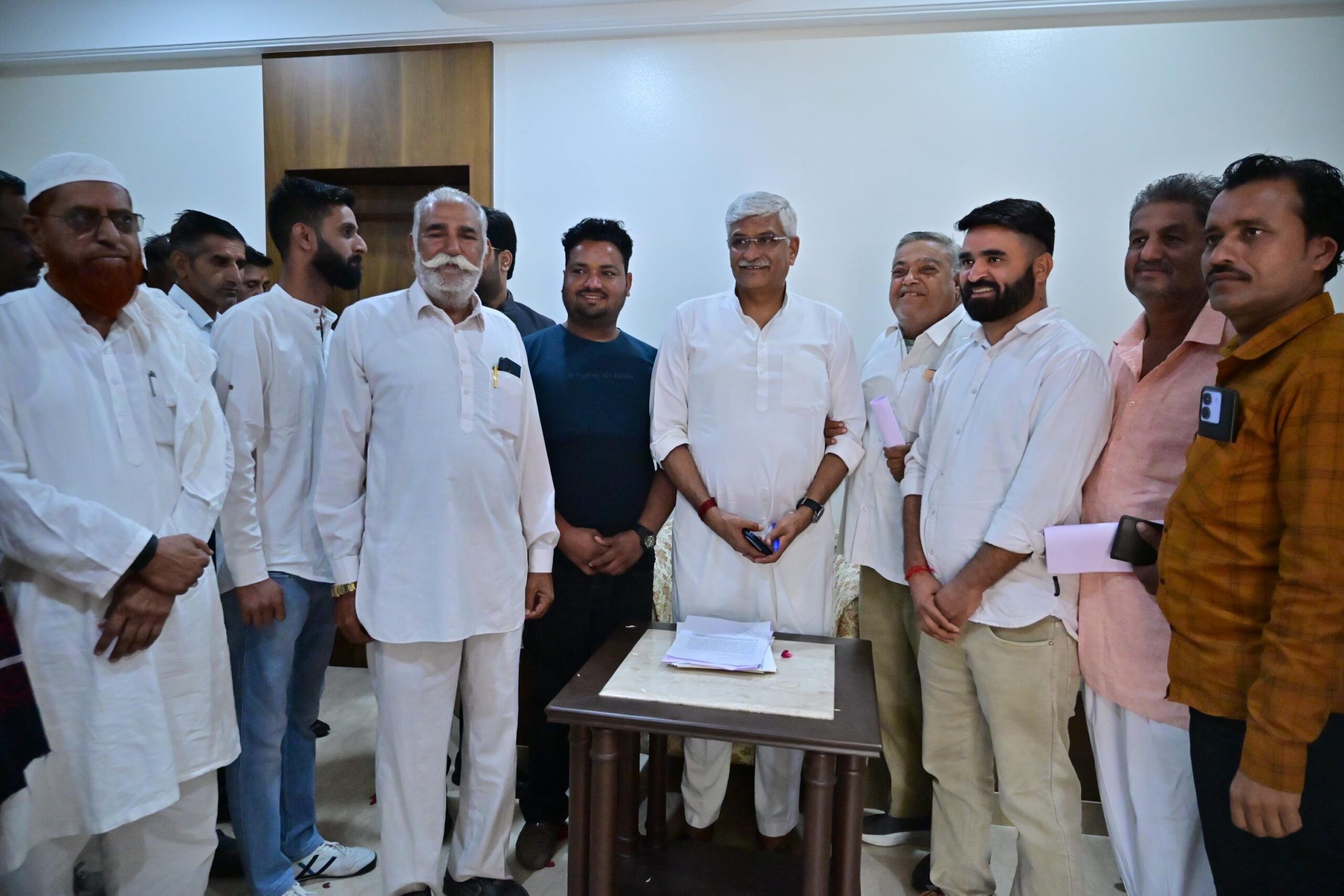
Jaipur, Nov 23 (SocialNews.XYZ) Union Minister for Culture and Tourism Gajendra Singh Shekhawat has described the inaugural ‘SCO Civilisation Dialogue’, hosted by India, as a significant milestone in the country’s cultural diplomacy.
He said the initiative, launched at the behest of Prime Minister Narendra Modi, would provide an effective platform for identifying, preserving and promoting the shared civilizational heritage of SCO member nations in the years ahead. Interacting with the media during his visit to Jodhpur on Monday,
Shekhawat recalled that at the 2025 SCO Heads of State meeting, Prime Minister Modi had proposed that the organisation’s platform should extend beyond economic and geopolitical issues and the protection of national interests.
He had emphasised the need to utilise the SCO framework to preserve and promote the centuries-old shared cultural heritage of member nations.
The proposal received unanimous support from all participating countries. As a follow-up to this initiative, India hosted the first ‘SCO Civilisation Dialogue’, bringing together delegations from 22 countries.
Representatives participated at ministerial, secretarial and diplomatic levels. Shekhawat noted that while addressing the inaugural session on November 20, Prime Minister Modi had stressed that discussions on shared cultural heritage should not remain confined to academic deliberations but should translate into a concrete action plan for the next decade.
He had also called for institutionalising cultural cooperation among member nations.
The Union Minister said that during the two-day event, four key areas were discussed extensively through ministerial-level deliberations and bilateral meetings. These included the preservation of shared Buddhist traditions, monasteries and viharas; documentation and conservation of ancient manuscripts; research into historical cultural routes and traditional trade links; and the effective representation of the shared cultural identity of member nations on the UNESCO platform.
He said the enthusiasm and broad consensus demonstrated by participating countries in expressing their commitment to cultural cooperation had exceeded expectations.
The deliberations culminated in the adoption of the ‘Indraprastha Communiqué’, which will serve as an important foundation for strengthening cultural ties among member nations and safeguarding their shared heritage.
Shekhawat remarked that the initiative represented much more than an opportunity for India to take pride in its rich cultural legacy. It marked a significant step towards establishing India as a leader in cultural diplomacy on the international stage.
India's civilizational continuity, spanning more than 10,000 years, along with its intellectual traditions, history, architecture, philosophy and cultural diversity, gives the country a distinctive identity.
The priority now, he said, was to present this heritage effectively before the world while working with other nations to preserve their shared cultural legacy. Highlighting India-Nepal relations, Shekhawat described rail connectivity with Janakpur as an important initiative for strengthening the religious and cultural bonds between the two countries.
He noted that India and Nepal share deep-rooted historical, religious and cultural ties, with Janakpur holding special significance as the birthplace of Sita, the consort of Lord Rama.
The establishment of rail connectivity would give fresh impetus to these longstanding connections. He added that the bilateral meeting with Nepal’s Minister for Tourism and Culture on the sidelines of the SCO Civilisation Dialogue would play an important role in expanding cultural exchanges and tourism cooperation between the two countries.
He emphasised that the cultures of India and Nepal could not be viewed in isolation, as they are deeply interconnected through shared religious beliefs, historical traditions and cultural heritage.
Shekhawat further noted that there was considerable enthusiasm in both countries regarding the expansion of rail connectivity. The development of new airports and the expansion of Nepal’s railway network would open up fresh opportunities for religious and cultural tourism.
These initiatives would not only facilitate movement between the two countries but also promote destinations tied to their shared religious and historical heritage, particularly those linked to the Ramayana Circuit.
Concluding, Shekhawat said the SCO Civilisation Dialogue gave member nations an opportunity to view their shared heritage from a fresh perspective and work collectively to preserve it.
He added that cultural cooperation could further strengthen mutual trust, dialogue and relations among nations, reaffirming India's commitment to playing an active role in this endeavour.
Source: IANS
Gopi Adusumilli is a Programmer. He is the editor of SocialNews.XYZ and President of AGK Fire Inc.
He enjoys designing websites, developing mobile applications and publishing news articles on current events from various authenticated news sources.
When it comes to writing he likes to write about current world politics and Indian Movies. His future plans include developing SocialNews.XYZ into a News website that has no bias or judgment towards any.
He can be reached at gopi@socialnews.xyz
This website uses cookies.

