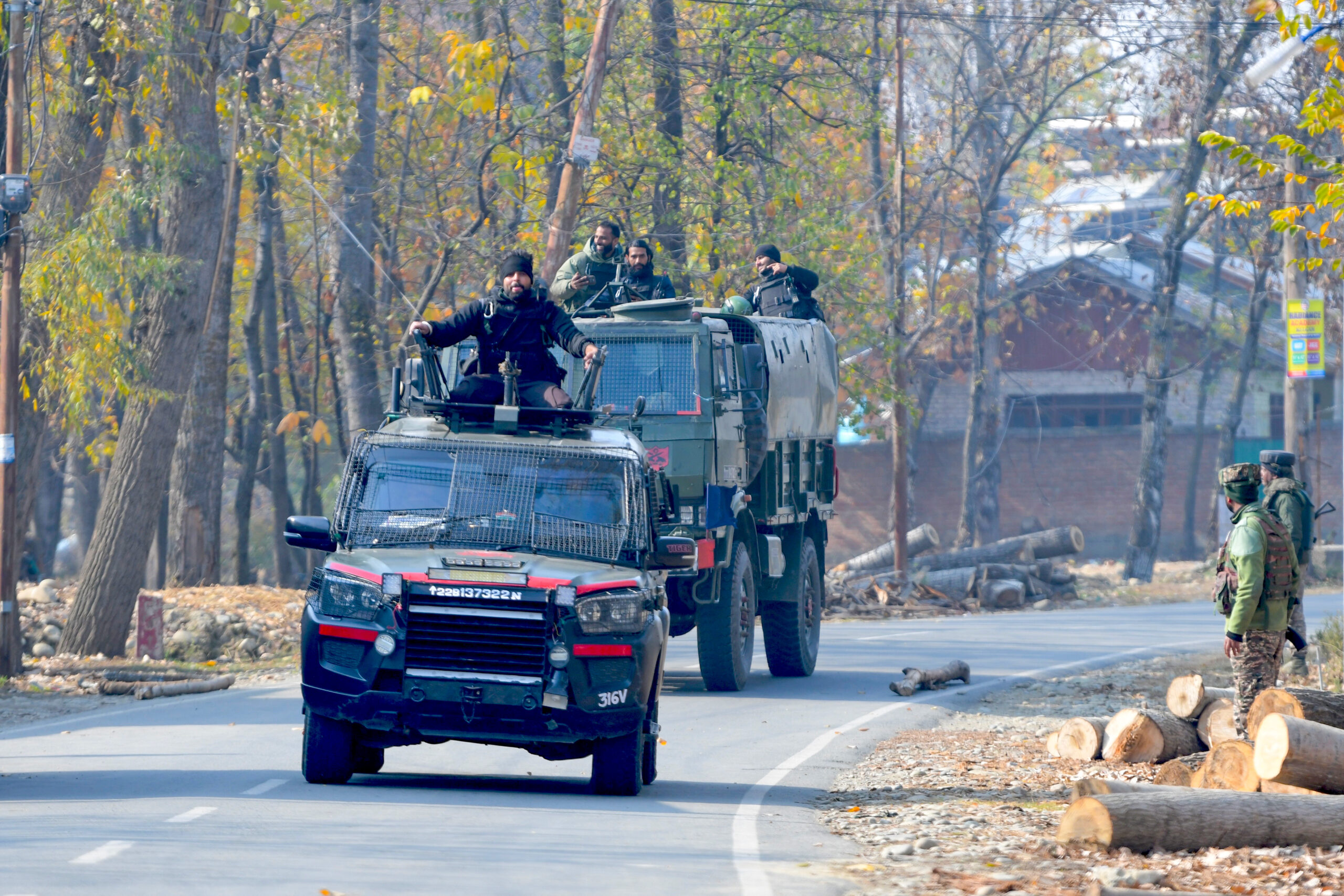
New Delhi, Nov 19 (SocialNews.XYZ) One of the primary factors that resulted in the killing of two operatives linked to the November 14 Kulgam attack was Human Intelligence (HUMINT). In recent months, the ISI had been relying heavily on HUMINT to get the better of the Indian security forces.
This was done primarily to counter the technical Intelligence (TECHINT) that the Indian forces were using in Jammu and Kashmir.
An Intelligence Bureau official said that there were a combination of a lot of factors that went into the killing of Lashkar-e-Taiba commander Lateef Bhat and his associate Umar Nisar Dar. The LeT operatives in the Valley had been following a pattern whereby they remained among the public or at religious places and abandoned government offices.
Post an attack, Bhat would never communicate with any of his handlers immediately, and this is where HUMINT came in handy, the official said.
The agencies had drawn up a list of hideouts used by the Lashkar-e-Taiba operatives, including Bhat. The hideouts were usually in the rural parts of Kulgam and Shopian, and these operatives never returned to these places post an attack.
Since Bhat was not returning to the specified hideouts after an attack, it was hard to track him down. Using Human Intelligence, the agencies managed to pick up information from local people before zeroing in on his location, the official said.
An official said that the ISI’s strategy has been constantly evolving. It has been looking to return to the older style of operations where man plays a bigger role over a machine. This was being done deliberately to confuse the Indian agencies who had been relying heavily on technical Intelligence.
After this came to light, the Indian agencies decided to blend both styles of Intelligence to get the better of the ISI-backed Lashkar-e-Taiba operatives.
After the killing of Hizbul Mujahideen commander Burhan Wani, the agencies managed to take down the entire command structure of the Hizbul Mujahideen, following which the outfit never managed to revive itself in the Valley. During these operations, there was a lot of reliance on HUMINT, and the primary drivers were the Jammu and Kashmir police.
Another official said that to drive HUMINT, the local police are the key factor, as they are the ones who have their eyes and ears on the ground. They mix with the locals easily and manage to elicit key information, which eventually leads up to big-ticket killings in the Valley, the official said.
The operation against Lateef Bhat began with the agencies studying the CCTV footage both pre- and post-the Kulgam attack. Bhat and his associate were out in a jiffy following the attack, and while analysing the pattern, it was learnt that they could not have gone far.
Officials say that in addition to Human Intelligence, the agencies also relied heavily on studying the past incidents involving Bhat and the manner in which he reacted before and after an attack. He more or less followed the same pattern all the time, as he had managed to give the slip on several occasions.
He was not going to change the pattern this time, and this is what eventually led to the agencies zeroing in on him. The HUMINT that was gathered helped the security forces focus on key areas where Bhat may have been hiding.
It became clear that he did not go far and was anticipating that the security forces would look for him in the usual hideouts. He was buying time and planning an escape before he was cornered.
Since the Kulgam attack, the security agencies, including the Indian Army, CRPF, Jammu and Kashmir Police and National Investigation Agency (NIA), held at least five meetings daily. They would analyse the intelligence, both Human and technical, that had been gathered before setting out in the field.
More importantly, all the forces acted in a coordinated manner, and there was never any let-up when it came to information sharing. A slip-up was not an option, and letting Bhat go meant the Valley witnessing more attacks.
While the central agencies worked on analysing Bhat’s behavioural patterns and technical Intelligence, the Jammu and Kashmir police worked on their local networks. The police were able to zero in on his location at a Mosque.
This was the turning point in the operation that took place on November 18, which eventually led to the killing of Lateef Bhat, an official said.
Source: IANS
Gopi Adusumilli is a Programmer. He is the editor of SocialNews.XYZ and President of AGK Fire Inc.
He enjoys designing websites, developing mobile applications and publishing news articles on current events from various authenticated news sources.
When it comes to writing he likes to write about current world politics and Indian Movies. His future plans include developing SocialNews.XYZ into a News website that has no bias or judgment towards any.
He can be reached at gopi@socialnews.xyz
This website uses cookies.

