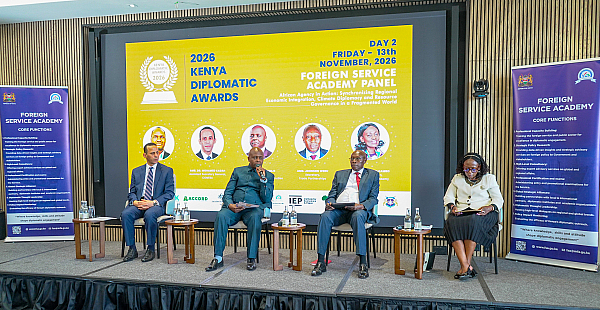
The panel, held under the theme “African Agency in Action: Synchronizing Regional Economic Integration, Climate Diplomacy, and Resource Governance in a Fragmented World,” brought together diplomats, policymakers, researchers and regional experts to examine how Africa can strengthen its position in global affairs amid growing geopolitical and economic uncertainties.
Speaking during the session, FSA Council Chairperson Prof. Patrick Maluki underscored the need for African countries to move beyond participation in global processes and take a more proactive role in shaping international decisions, negotiating beneficial partnerships and advancing continental priorities.
He noted that Africa's ability to influence global decisions depends on stronger institutions, coordinated diplomatic engagement and a well-trained diplomatic corps capable of safeguarding national and regional interests.
The panel, moderated by Dr. Kennedy Osoro of the University of Nairobi, featured Dr. Hassan Khannenje, Director of the HORN International Institute for Strategic Studies; Amb. Johnson Weru, former Principal Secretary for Trade; Amb. Josephine Ojiambo, former Kenyan Ambassador to the United Nations; and Amb. Mohammed Kadah, Assistant Secretary General of COMESA.
During the discussions, Amb. Ojiambo called on African countries to negotiate as a bloc to strengthen their collective bargaining power and secure more favourable outcomes in international engagements.
She also underscored the importance of specialised training for African climate negotiators to enhance the continent's capacity to articulate its priorities and secure better outcomes in climate finance, adaptation and international environmental negotiations.
Dr. Khannenje emphasised the need to build trust among African countries and strengthen continental institutions through greater mobilisation and utilisation of Africa's own financial resources.
He called for increased intra-African trade and stronger economic cooperation to reduce external dependence, build resilient regional markets and enhance the continent's economic competitiveness.
Amb. Weru expressed concern over weaknesses in agreements negotiated by African countries, noting the need to strengthen the technical capacity of negotiators to secure more equitable and beneficial trade and investment agreements.
He called for sustained investment in specialised training to equip African negotiators with the skills required to safeguard national interests and maximise opportunities arising from international partnerships.
The discussions also highlighted opportunities under the African Continental Free Trade Area (AfCFTA) and regional economic communities, including COMESA, to expand intra-African trade, attract investment and strengthen regional value chains.
On climate diplomacy and resource governance, the panel emphasised the importance of strengthening Africa's negotiating capacity in climate finance, adaptation and green investment, while ensuring that the continent's critical minerals contribute to industrialisation, technology transfer and local value addition.
The engagement formed part of the two-day conference held under the broader theme “Harnessing Africa's Continental and Regional Institutions for Peace, Resilience and Transformation amid a Fragmenting Global Order.” The conference provided a platform for examining how African regional and continental institutions can strengthen cooperation, respond to emerging challenges and translate policy commitments into practical development outcomes.
The Foreign Service Academy reaffirmed its commitment to strengthening diplomatic training, policy research and institutional partnerships to equip diplomats with practical skills in economic diplomacy, climate negotiations and sustainable resource governance.
The discussions are expected to inform policy recommendations on strengthening foreign service training curricula and institutional collaboration, reinforcing the Academy's role in developing a professional and responsive diplomatic service capable of advancing Africa's economic transformation, strategic autonomy and sustainable development.
Distributed by APO Group on behalf of Ministry of Foreign and Diaspora Affairs, Republic of Kenya.
This website uses cookies.



