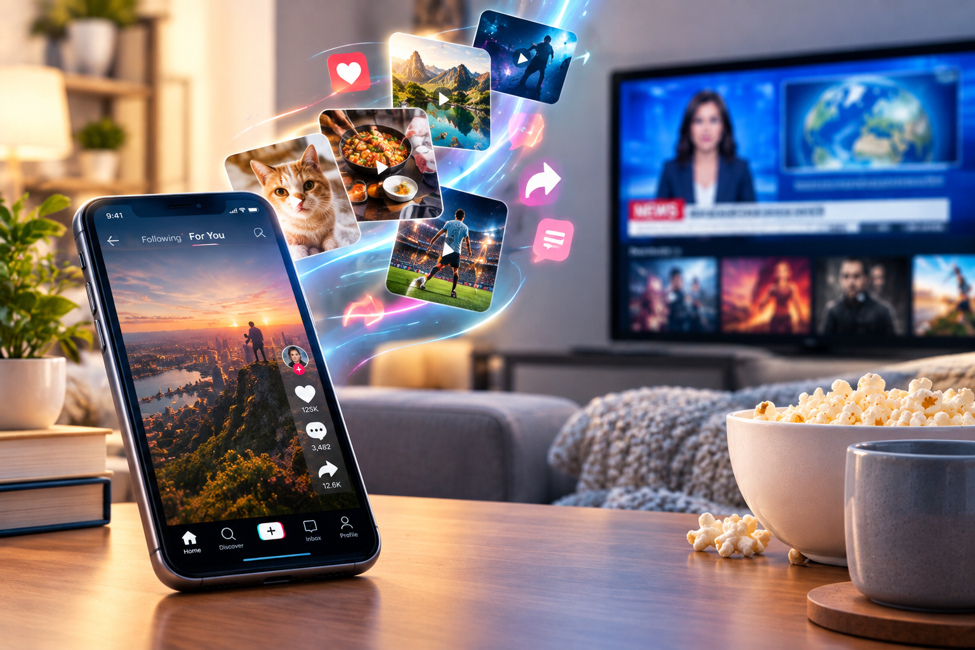
Not long ago, making a sharp, watchable video took pricey software, a powerful computer, and hours of patience. Now a phone and a simple video clip editor are enough to trim raw footage, cut out dead air, add captions, drop in music, and resize everything for a vertical screen, often in a few minutes. That shift matters more than it seems. When anyone can turn a rough recording into a clean 30-second clip, the number of people telling stories explodes. Students, local reporters, comedians, and small business owners can all publish content that looks professional. This easy access to editing tools is a big reason short-form video has taken over our feeds and changed how we get both our news and our fun.
I still remember when a "short" online video meant three or four minutes. These days, three minutes can feel like a movie. TikTok, Instagram Reels, and YouTube Shorts trained millions of us to expect something interesting within the first two seconds, or we swipe away.
Most of us carry our main screen in our pockets. We check it on the bus, in line for coffee, and (let's be honest) in bed when we should be sleeping. Vertical video fits that habit perfectly. You don't have to rotate your phone, wait for anything to load, or decide what to watch. The next clip simply shows up.
Short videos give platforms a lot of data very fast. Every time you watch, rewatch, like, or skip, the app learns a bit more about you. After a single evening of scrolling, your feed can feel strangely personal. That's exciting, and it's also a little unsettling.
This is where things get really interesting. Many younger people now hear about major events from a creator on TikTok before they see a headline on a news site. For a lot of viewers, a 60-second explainer has replaced the evening broadcast.
Short-form news works because it fits into busy lives. Here's what tends to make these clips so popular:
That personal touch is powerful. It's also where trouble can start.
Traditional news outlets noticed the shift and started adapting. Many major publications now have dedicated short-form teams. Reporters film quick on-camera updates, break long investigations into bite-sized pieces, and use captions because so many people watch with the sound off.
Some journalists love it. They reach audiences who would never open a newspaper. Others worry that squeezing complex stories into 45 seconds strips away the context that makes reporting meaningful. Both sides have a point. A tax policy debate or a foreign conflict rarely fits neatly into a clip that ends before your coffee cools.
Short videos spread fast, and false ones spread just as fast. A clip pulled out of context, an old video labeled as new, or a confident creator who got the facts wrong can reach millions before anyone checks it. Because the format rewards emotion and surprise, calm and careful corrections often get far fewer views than the original mistake.
If news has changed, entertainment has been flipped upside down.
Ten years ago, becoming famous usually meant getting picked by a studio, label, or network. Now a teenager with good comic timing can build a bigger audience than some cable shows. The creator economy has turned everyday people into media businesses, with brand deals, merch, and fan memberships.
What I find most refreshing is the variety. You'll find:
Many hit songs now blow up because a 15-second chorus becomes a trend. Record labels pay close attention to which sounds take off, and some artists write hooks with short clips in mind.
Movie studios and streaming services have caught on too. Trailers are now cut into vertical teasers. Actors join trends to promote new releases. Even older shows find fresh fans when a clever scene goes viral years after it first aired. A 20-second moment from a forgotten sitcom can send thousands of people searching for the full series.
Here's the honest part. Short-form video can make long content feel harder to sit through. Lots of people, myself included, have noticed reaching for the phone halfway through a movie or struggling to finish a long article. Constant swiping gives the brain quick hits of novelty, and slower content can't always compete.
That said, it's not all bad news. Plenty of viewers use short clips as a doorway. They watch a quick summary of a book, a documentary, or a news story, then go find the full version. Short videos can spark curiosity instead of replacing depth, as long as we're intentional about how we use them.
You don't need to delete every app to keep a healthy balance. A few small habits make a big difference:
Short-form video isn't going away. If anything, it's settling in as the default way many people discover what's happening in the world and what's worth laughing at. News outlets will keep testing new formats, creators will keep finding clever ways to tell stories, and the tools for filming and editing will only get easier to use.
The real question is how we choose to watch. Short clips can inform, entertain, and connect us with voices we'd never hear otherwise. They can also leave us skimming the surface of everything and understanding very little. The format itself is neutral. What we do with it, both as viewers and as creators, decides whether it makes us sharper or just keeps us scrolling.
So the next time you swipe through your feed, pay a little attention to how each clip makes you feel and what it actually teaches you. That small moment of awareness might be the most valuable thing you take away.
An Indo-American News website. It covers Gossips, Politics, Movies, Technolgy, and Sports News and Photo Galleries and Live Coverage of Events via Youtube. The website is established in 2015 and is owned by AGK FIRE INC.
This website uses cookies.


