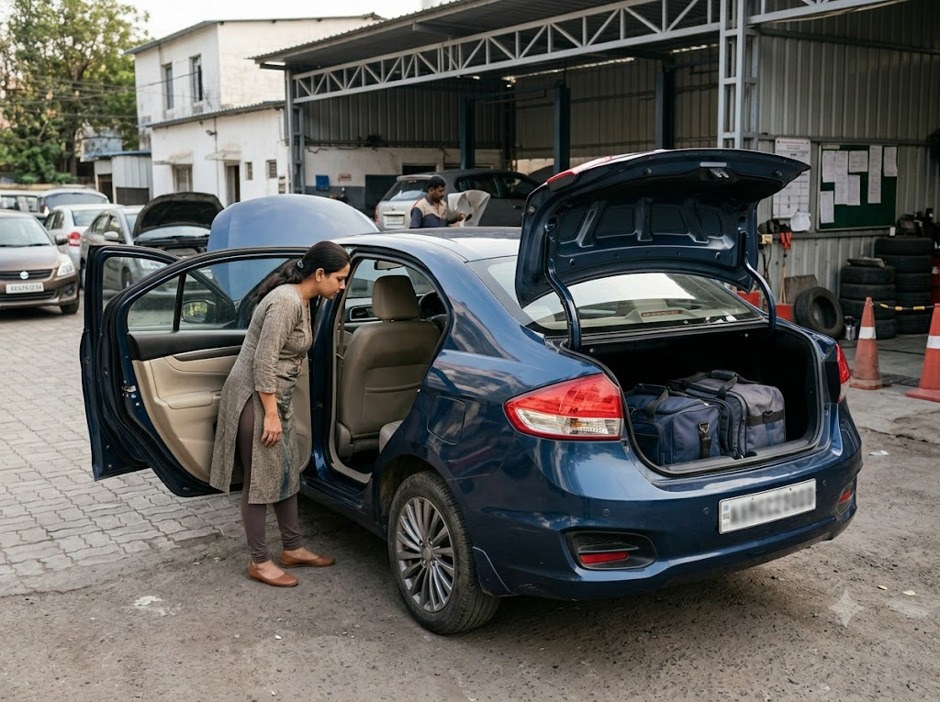
The Ciaz never aggressively demanded attention. It arrived in 2014, settled quietly into the C-segment sedan space, and prioritised passenger comfort. A decade later, it remains a vehicle that used car buyers frequently circle back to, often after test-driving alternatives and realising the importance of rear-seat space.
Many assume a sedan of this vintage must involve significant compromises. However, variant differences on this car run deeper than the badge suggests, and understanding them is crucial before fixating on a single listing.
Rear legroom is the defining characteristic of the Ciaz. Maruti built it on a long wheelbase, which becomes immediately apparent when taller passengers sit in the back without their knees contacting the front seats. Additionally, the 510-litre boot accommodates substantial luggage easily. For families who genuinely utilise the rear seat daily, that combination of space is difficult to match at this price point.
The ride quality is tuned for comfort. When pushed through a fast corner, the body leans noticeably, and the steering is tailored for ease rather than sharp feedback. The vehicle is far more suited to cruising steadily than aggressive driving. However, on broken city roads, that softer suspension tune proves its worth by absorbing most imperfections.
A base Sigma and a top-tier Alpha are separated by significant features, including alloy wheels, LED projector headlamps, a touchscreen interface, a reverse camera, and automatic climate control. That gap translates to real value on the resale market, which buyers sometimes underestimate until they are standing at a dealership comparing two externally similar cars. Anyone working through a shortlist should review comprehensive second hand Maruti Suzuki Ciaz buying tips to understand exactly what equipment each variant offers.
The Ciaz featured four different engines across its production life, and the one under the bonnet alters the ownership experience significantly.
Pre-facelift models from 2014 to 2018 utilised the 1.4-litre K14B petrol engine. It is smooth, relatively affordable to maintain, and while it may lack aggressive mid-range punch when fully loaded, it serves a patient driver well. The 2018 facelift introduced the 1.5-litre K15B engine featuring SHVS mild-hybrid assistance. This is generally considered the superior petrol option, offering more torque, quieter highway cruising, and improved real-world fuel economy.
Diesel buyers face a different set of considerations. The widely used 1.3-litre DDiS engine, sourced from Fiat, has a massive mechanic base and delivers excellent fuel efficiency. It operates with a timing chain rather than a belt, which typically requires inspection and potential replacement around the 90,000 to 1,00,000-kilometre mark to prevent chain stretch and related engine noise. Ignoring this maintenance schedule can lead to expensive repairs. The later 1.5-litre in-house diesel offers a smoother and torquier experience, but its shorter production run means parts availability is comparatively narrower.
Automatic options were limited to a four-speed torque converter on the petrol variants. While the technology is dated, it is known for being highly reliable in city conditions.
However, checking service history remains a critical factor. Buyers exploring the broader market of used Maruti cars will notice the Ciaz typically undercuts similarly aged sedans from competing brands while offering superior rear cabin space. It is a comfortable and sensible option, which is exactly why it continues to find buyers who appreciate its practical virtues.
Inspecting a Ciaz requires looking beyond the exterior paint condition.
For SHVS mild-hybrid models, the lithium-ion battery pack is located under the front passenger seat. Confirming that the hybrid system cycles properly through its idle stop-start function during a test drive is essential, as replacement costs for this battery are substantial.
For diesel variants, cross-referencing service invoices for regular oil changes is often more reliable than trusting odometer readings alone. Turbochargers on neglected 1.3 DDiS units can require costly replacements, so listen for any unusual whine that climbs with engine revs.
Other areas worth checking include:
An Indo-American News website. It covers Gossips, Politics, Movies, Technolgy, and Sports News and Photo Galleries and Live Coverage of Events via Youtube. The website is established in 2015 and is owned by AGK FIRE INC.
This website uses cookies.


