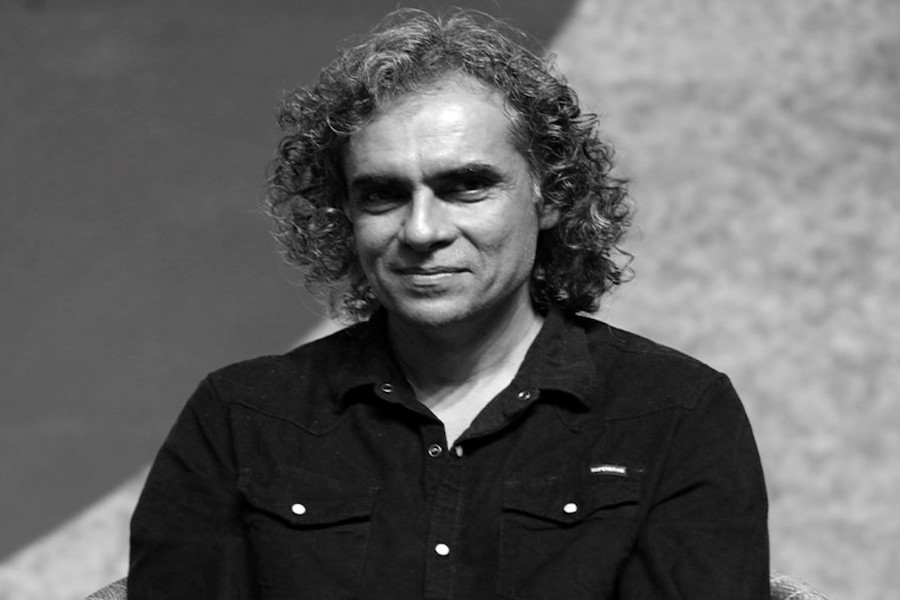
Making his point, Imtiaz Ali said, "There are things in this world—or things that are essential—that simply aren't trending on the internet right now; this is a crucial point the media ought to highlight. Just because a film isn't on an OTT platform doesn't mean it lacks merit—in fact, some of the best films aren't on OTT channels. You know, so much happened before the internet era. When I was growing up—back in the 80s and 90s—the biggest name in cinema was Subhash Ghai. I was actually mentioning this in an interview recently: he became a household name, almost like 'Coca-Cola'—a generic term that everyone recognized. In fact, when I directed my first school play, people used to tease me by calling me 'Subhash Ghail' [a play on his name]. That’s the impact he had. The wonderful thing about cinema is that one can keep discovering and rediscovering these works; Nana Patekar, for instance, remains present through his films. Even though I’ve never met him personally, I continue to 'meet' him through his movies. So, it is vital for us to revisit the cinema of different eras."
Ali’s reference to Subhash Ghai captures a time when a filmmaker’s cultural influence extended far beyond the release of a particular film. Ghai’s name became synonymous with mainstream Hindi cinema for an entire generation, and his work helped shape popular storytelling, music, performances and cinematic spectacle. For Ali, growing up in the 1980s and 1990s meant witnessing a kind of cultural presence that could not be reduced to online views, trending hashtags or streaming charts. The anecdote about being teased as “Subhash Ghail” after directing a school play adds a personal touch to his larger point: some filmmakers become so deeply embedded in popular culture that their names become part of everyday conversation. Their impact is felt not only in theatres but also in the aspirations of young people who dream of telling stories of their own.
The filmmaker’s comments also raise an important question about how cinema is remembered today. In an era when audiences often discover films through streaming recommendations, viral clips and social media discussions, a title that is unavailable online can easily slip out of public view. But accessibility and artistic merit are not the same thing. A film does not suddenly become less meaningful because it is missing from a digital catalogue, just as its presence on a platform does not automatically make it significant. Cinema has a history that stretches across decades, languages, styles and generations, and much of that history deserves attention beyond the limits of what is currently easy to watch. Rediscovery requires curiosity, preservation and a willingness to look beyond whatever the internet is recommending at a particular moment.
Ali’s mention of Nana Patekar brings an especially moving dimension to his argument. An actor’s work can outlive the moment in which it was created, allowing new audiences to encounter their performances long after the original release. Ali says that although he has never met Patekar personally, he continues to “meet” him through his films. It is a powerful observation about the relationship between cinema and time: an actor may no longer be physically present in a particular moment, but the emotions, characters and experiences captured on screen remain available to audiences. Films can preserve an artist’s voice, expressions and creative choices, creating a connection that crosses generations. In this sense, watching an older film is not simply an exercise in nostalgia; it can be a fresh encounter with an artist whose work still has something to say.
Imtiaz Ali’s message goes beyond OTT availability. It is a call to expand the way we think about cinema, to seek out films that may not be trending and to recognise the creative contributions of filmmakers and actors whose work deserves to be remembered. The internet has made discovery easier in many ways, but it cannot be the only measure of cultural importance. Some cinematic experiences are waiting to be found again, whether through restored films, retrospectives, film festivals, archives or conversations with people who remember watching them for the first time. Cinema’s true impact lies in its ability to move, challenge and inspire people across generations. As Ali suggests, revisiting films from different eras allows us not only to understand the past but also to discover how much of it continues to live in the present.
News Helpline is a Brand in the world of daily Bollywood Content. We are a team of Innovative, Hard working and Creative people working in media since last 15 years. We were the first to sense the changing phase of News Industry with the progress of IT industry. Hence in the year 2008 we came up with a first of its kind Bollywood News Application, a website where we uploaded Bollywood news on daily basis and our client could download this news from anywhere in the world on the same day of the event. Then with the passage of time we improved and evolved. The result is today our client in any area of the world receives their Bollywood news (HD quality) within 2-3 hrs. post event. The value of News is very Time dependent and we at News Helpline deliver the News before thay become rumors.
This website uses cookies.


