Nigeria has approximately 26 stadiums. Four belong to the federal government. The rest are scattered across the states. They were built with public money, for public pride, at enormous cost.
And only one of them, the Godswill Akpabio Stadium in Uyo, meets the FIFA and CAF benchmarks required to host an international football match today.
If Lionel Messi were to play in Nigeria tomorrow, there is only one venue in the entire country where the match could be sanctioned. One stadium. In a nation of 230 million people. In Africa’s largest economy.
This is not a funding problem. Nigeria has spent billions on stadiums over six decades. The Moshood Abiola National Stadium in Abuja has 60,500 seats. The National Stadium in Lagos has 45,000. The Liberty Stadium in Ibadan has 25,000. We built them. We hosted tournaments in them. And then we abandoned them.
These stadiums are used for a handful of events each year. For the remaining 335 days, they sit empty, decaying, consuming taxpayer money for maintenance that barely maintains anything. A stadium of 74,000 capacity in Nigeria rents for between 200,000 and 300,000 naira. That is not revenue. That is embarrassment.
The problem is not the stadiums themselves. The problem is the model. We built stadiums as monuments. We should have built them as economies.
A stadium, by itself, is a cost. It generates revenue on matchdays and drains the public purse every other day. But when a stadium becomes the anchor of an integrated sport and entertainment district, combining hotels, restaurants, retail, conference centres, gyms, cinemas, schools, residential, and commercial space within a single master-planned ecosystem, it transforms from a liability into an economy that generates revenue 365 days a year.
My friend Nicolas Pompigne-Mognard, Founder of African Collaborations Group, calls this model Victory District™. I call it common sense.
Consider the Moshood Abiola National Stadium in Abuja. You enter through a magnificent gate. Beyond it sits a facility that was once described as world-class when it was built for the All-Africa Games. Today it is, by many accounts, a white elephant. But the land is there. The infrastructure bones are there. The location, in the heart of the federal capital, is extraordinary.
Now imagine that same site transformed into a sport district. The stadium is renovated and upgraded to FIFA standards. Around it, hotels rise. Conference and exhibition centres open. Restaurants, retail, and entertainment venues activate. Training academies and sports science facilities train the next generation of Nigerian athletes. A transport hub connects the district to the city.
Every day, people come. Not just on matchdays. Every day. To work, to eat, to shop, to train, to stay, to be entertained. Revenue flows. Jobs are created. The taxpayer stops paying for an empty stadium and starts benefiting from a thriving urban economy.
This is not fantasy. Look at Zamalek in Cairo. If you want a seat in that sports club, you must be a member, and membership is expensive and coveted. The district generates its own economy. Look at what is being built in London around Tottenham Hotspur Stadium. Look at Hollywood Park in Los Angeles. The model exists. It works. It has been proven.
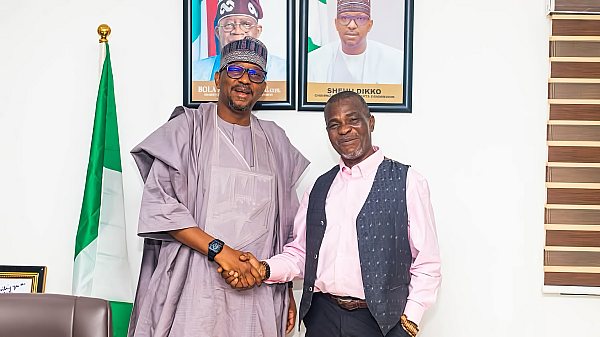
President Bola Ahmed Tinubu gave the National Sports Commission, under the leadership of Chairman Shehu Dikko, a mandate to create a sports economy. That economy cannot exist without sport infrastructure. But the right kind of sport infrastructure. Not more standalone stadiums built for a single event. Integrated sport and entertainment districts designed to operate every single day, to generate diversified revenue, and to be financially self-sustaining without public subsidy.
The sports master plan presented in 2020 projected that Nigeria would be ready to host the FIFA World Cup and the Olympic Games by 2030. We are nearly there, and we are further from that goal than we were when the plan was written. Not because we lack ambition. Because we built the wrong things.
Money is being spent. Budgets are being approved. Construction is underway in some places. But the question remains: after the money is spent, how many of these stadiums will actually meet FIFA standards? How many will be able to host the competitions Nigeria aspires to attract? How many will generate the revenue needed to sustain themselves without draining public funds? Until we can answer those questions with confidence, we are not building a sports economy. We are singing a song in a strange land.
The solutions exist. When Former FIFA Secretary General Fatma Samoura created the FIFA Task Force for Infrastructure Development in Africa, she understood that the continent needed a new approach. African Collaborations Group (ACG), born from that Task Force, is now originating exactly the kind of integrated sport and entertainment districts that Nigeria and the continent need. The model is ready. The expertise is assembled. The question is whether Nigeria will seize the opportunity or continue singing a song in a strange land. It is time to stop building stadiums and start building districts. And the Moshood Abiola National Stadium in Abuja should be the first one.
Distributed by APO Group on behalf of AIPS Africa.
This website uses cookies.



