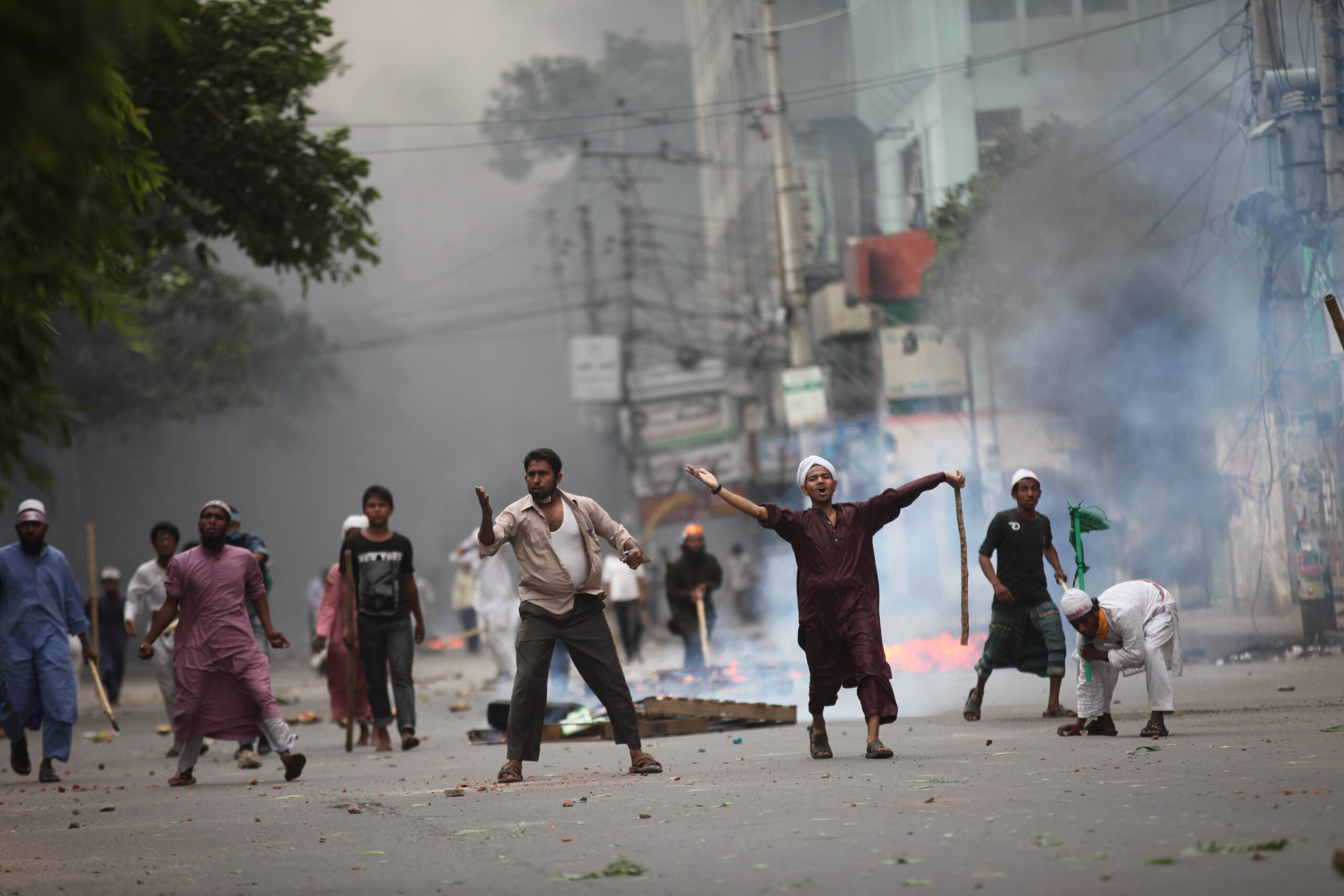
Dhaka, Oct 5 (SocialNews.XYZ) Bangladesh was born out of an uprising against a brutal Pakistani military dictatorship, but despite the country’s proven ability to bring down authoritarian regimes, it has struggled to build a sustainable democracy, local media reported, citing a Bangladeshi journalist.
Addressing a conference on the Bay of Bengal Conversation organised by the Dhaka-based Centre for Governance Studies, Mahfuz Anam, Editor and publisher of leading Bangladeshi newspaper 'The Daily Star' said, “We are so good at dismantling dictatorships, but the tragic reality is that we are so bad at building democratic institutions.”
Anam noted that when dismantling a dictatorship, the nation gets united. But, once the dictatorship is dismantled, the nation divides.
“The very groups who worked together to dismantle the dictatorship then become each other’s enemies. We really don’t know how to bring people together, with all their energy, all their innovation, all their resilience, and turn that resource into national strength,” 'The Daily Star' quoted him as saying.
Recalling Bangladesh’s political history, Anam said the fall of Bangladeshi military ruler Hussain Muhammad Ershad and the return to democracy in 1991 had raised hopes of a democratic rebirth.
“But then we failed to develop a democracy in Bangladesh, and then there was a military uprising. Ershad was the last one to fall, and we returned to democracy in 1991, and we really hoped that this would be the rebirth of democracy in Bangladesh,” he stated
Anam stated that Bangladesh subsequently conducted several credible elections under caretaker administrations, but those systems failed to endure.
“Instead of institutionalising fair elections, we got more and more into conflicts, rivalries and then destruction,” he added.
According to Anam, the failure to build strong democratic institutions in Bangladesh stemmed from the fact that “we have over-politicised every institution imaginable”.
“This over-politicisation has corroded the effectiveness of almost all our institutions,” he said.
He further said political divisions along party lines had permeated almost every profession in Bangladesh, from doctors expected to serve all patients to journalists, whose credibility depends on maintaining non-partisanship.
“In a profession where credibility is your lifeblood, how can you openly side with a political party and still expect that you will enjoy credibility?” Anam questioned.
“Police are always used as a partisan extension of one’s party muscle. Intelligence agencies are used for political purposes. Institutions like the Anti-Corruption Commission, which are supposed to be constitutional bodies and run independently, are all politicised,” he added.
Source: IANS
Gopi Adusumilli is a Programmer. He is the editor of SocialNews.XYZ and President of AGK Fire Inc.
He enjoys designing websites, developing mobile applications and publishing news articles on current events from various authenticated news sources.
When it comes to writing he likes to write about current world politics and Indian Movies. His future plans include developing SocialNews.XYZ into a News website that has no bias or judgment towards any.
He can be reached at gopi@socialnews.xyz
This website uses cookies.

