New Delhi, Sep 16 (SocialNews.XYZ) Kabul's Taliban regime considers the Doha Process, despite a good beginning, as having failed so far to achieve its intended objectives, with very limited progress made in social and economic cooperation with Afghanistan while the country's expectations remain unmet.
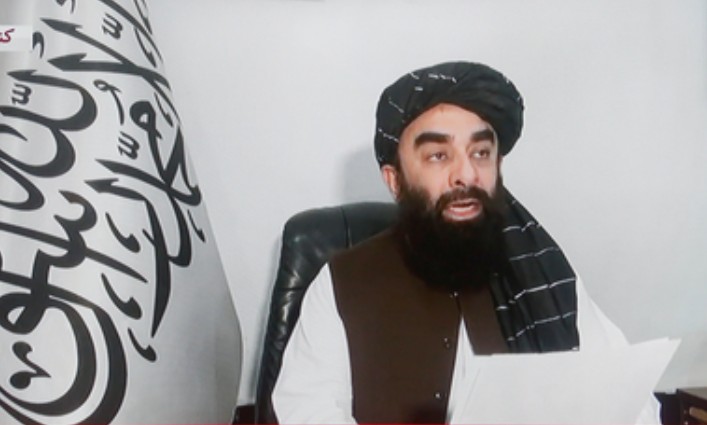
The process had not yet been completed and needed to be pursued further to achieve the objectives for which it was established, Taliban Spokesperson Zabihullah Mujahid told Afghanistan's Tolo News this week.
This comes seven months after Rosemary DiCarlo, UN Under-Secretary-General for Political and Peacebuilding Affairs, visited Afghanistan for three days and held talks with officials on the Doha Process and its working-group meetings, Kabul Times added on Tuesday.
It also said that the process has included three rounds of meetings of special representatives for Afghanistan, as well as working-group meetings intended to help facilitate renewed engagement between it and the international community.
Separate reports reminded that The Taliban did not attend the first two rounds of the Doha Process.
While they were excluded from the May 2023 launch, the regime refused to join the February 2024 meeting after their demands for recognition as sole representatives, exclusion of women and civil society, and a high-level UN meeting were rejected.
They finally participated in the third meeting held between June 30 to July 1, 2024, by sending a five-member delegation led by Mujahid, but the session ended without major breakthroughs, amid criticism over the exclusion of Afghan women and civil society.
However, concerned groups see negotiations as the way forward with the Doha Process, launched by the United Nations in 2023, as the central diplomatic framework for engaging Kabul's current regime.
The United Nations Assistance Mission in Afghanistan (UNAMA) recently described the Doha Process as the main framework for dialogue on Afghanistan's issues.
Doha was chosen for its neutral setting, history of hosting peace talks, and Qatar's ability to convene diverse stakeholders with its prior role in hosting Taliban-US negotiations -- leading to the 2020 Doha Agreement -- and its ability to provide a safe venue for sensitive talks.
The Qatari capital has become a symbolic hub for Afghan diplomacy, offering both accessibility and credibility.
The Doha Process was designed as a structured platform for dialogue between the Taliban, international actors, and regional stakeholders. Its goal is to balance pragmatic engagement with adherence to UN principles on human rights, counterterrorism, and humanitarian access.
As of 2026, it has produced limited but notable outcomes, including technical cooperation on counternarcotics and humanitarian aid, though human rights, especially of women and children, remain the biggest obstacle, as UN reports have noted.
In February this year, Afghan professionals participated in a United Nations Office on Drugs and Crime (UNODC)-led visit to Jakarta under the Doha Process Counternarcotics Working Group, focusing on evidence-based drug prevention and treatment.
The meet saw it reflect incremental progress in technical areas where Taliban authorities have shown willingness to cooperate.
In March and June 2026, UN officials emphasised that the Doha Process remains the main channel for structured dialogue.
While Afghanistan has seen modest economic growth and infrastructure investment, reported repression -- especially against women -- continues to undermine legitimacy.
Geopolitically, being located at the crossroads of South Asia, Central Asia, and the Middle East, Afghanistan enjoys immense strategic value.
A landlocked state, it shares borders with Pakistan, Iran, Turkmenistan, Uzbekistan, Tajikistan, and China, and stands as a buffer state influencing regional power dynamics.
For India, Afghanistan is strategically important for regional security, counterterrorism, economic connectivity, and geopolitical influence in South and Central Asia.
Meanwhile, Afghanistan's fragile economy is strained by border closures with Pakistan and instability in Iran.
Rising commodity prices and limited reintegration capacity for returnees -- numbering nearly six million since 2023 -- highlight the urgency of sustained international engagement.
Despite sanctions, official reports say Afghanistan has seen some revenue mobilisation and infrastructure investment, yet, unemployment, declining household incomes, and environmental challenges persist.
Various reports suggest while the Doha Process has achieved incremental progress in technical cooperation, it remains stalled on fundamental issues of rights and governance.
The timing of the fourth Doha meeting on Afghanistan has yet not been announced, but the continuation of the process is expected to remain a key issue in discussions between the Taliban and international stakeholders.
Source: IANS
Gopi Adusumilli is a Programmer. He is the editor of SocialNews.XYZ and President of AGK Fire Inc.
He enjoys designing websites, developing mobile applications and publishing news articles on current events from various authenticated news sources.
When it comes to writing he likes to write about current world politics and Indian Movies. His future plans include developing SocialNews.XYZ into a News website that has no bias or judgment towards any.
He can be reached at gopi@socialnews.xyz
This website uses cookies.


