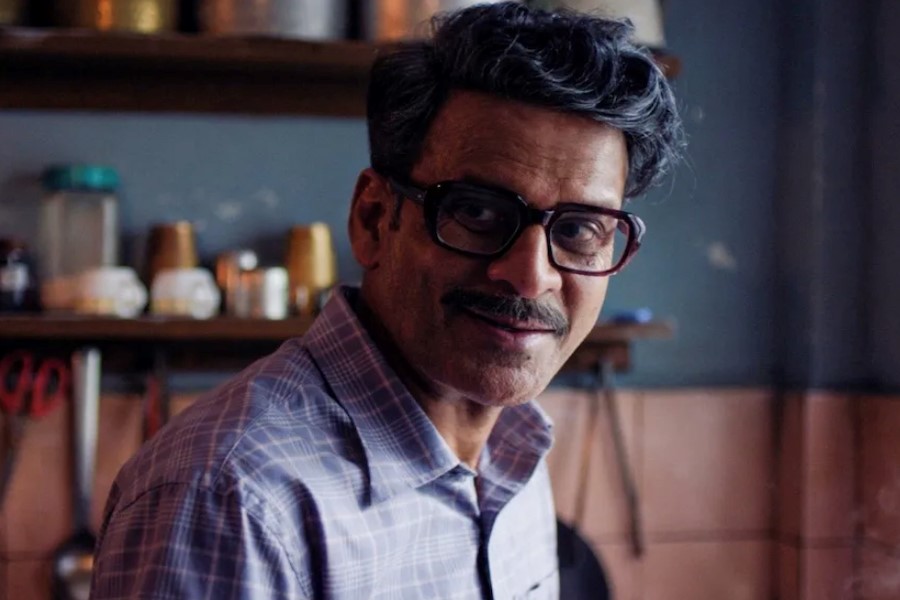
Cast – Manoj Bajpayee, Boman Irani, Divya Dutta
Writers: Aravind Adiga, Juhi Chaturvedi
Production: Spirit Media
Duration – 97 Minutes
Rating – 3
Not every story needs explosions, elaborate set pieces or larger-than-life heroes to make an impact. Sometimes, a battle over a home can reveal more about people than the biggest action sequence ever could. Last Man in Tower is one such film. Based on Aravind Adiga's acclaimed novel of the same name, Ben Rekhi's drama looks at the complicated relationship between home, money, dignity and the idea of progress. At the centre of it all is Manoj Bajpayee, who delivers a performance that gives the film its emotional weight.
Set against the changing landscape of Mumbai, the film explores what happens when an old residential society becomes caught between memories of the past and the promises of a more prosperous future. A redevelopment proposal offers residents financial security and the possibility of a better lifestyle, but accepting it also means giving up a place that carries decades of personal history. What begins as a practical decision gradually becomes a deeply personal conflict, forcing the characters to question their priorities and, in some cases, their own values.
The film's biggest strength is that it refuses to paint the situation in simple black and white. There are no obvious heroes and villains in this battle. People have different reasons for making the choices they do, and the film gives enough space to those motivations. For some, money represents opportunity and a chance to move forward. For others, a home represents memories, identity and a lifetime that cannot simply be assigned a price. That moral ambiguity gives the drama much of its power.
Manoj Bajpayee is outstanding as the film's central character. Playing a retired teacher and an ordinary middle-class man, the actor brings an extraordinary amount of depth to what could have easily become a one-note role. His character is not defined merely by his resistance to change. There is pride, disappointment, affection, frustration and emotional exhaustion beneath his decisions, and Bajpayee brings each of these shades to the screen with remarkable control.
The actor's greatest achievement here is his restraint. He does not rely on dramatic speeches or exaggerated emotional outbursts to communicate what his character is going through. A look, a pause or a slight change in expression often says enough. His performance makes the character feel like someone audiences could encounter in real life rather than a conventional cinematic protagonist. The emotional burden of the film rests heavily on his shoulders, and Bajpayee carries it with confidence.
Divya Dutta provides an equally interesting contrast. Her character is driven by her own understanding of what a better future should look like, and the film gradually reveals the different emotions behind her choices. There is a constant sense of uncertainty around her character, which makes her particularly compelling. The audience is repeatedly encouraged to reconsider whether her decisions are selfish, practical or simply understandable. Divya handles those contradictions beautifully and never reduces the character to an easy judgment.
Boman Irani brings his usual sophistication to the film as the builder at the centre of the redevelopment plan. His performance is measured rather than overtly villainous, which works well for the film's larger approach. Sukant Goel, meanwhile, makes an impression in the role of Bajpayee's son. Both actors have relatively limited screen time compared to the lead, but they use their moments effectively. The ensemble of residents also helps create the feeling of a real community where everyone has a different relationship with the place they call home.
Ben Rekhi's direction is deliberately understated. Rather than turning the redevelopment conflict into an exaggerated cinematic spectacle, he allows the drama to unfold in a grounded manner. There are no heroic entrances or artificially heightened moments designed simply to generate applause. The characters behave like ordinary people dealing with an extraordinary situation, and that authenticity becomes one of the film's defining qualities.
That realistic treatment also allows the film's larger social commentary to come through naturally. Last Man in Tower is not merely about one building or one disagreement. It examines the uncomfortable tension between development and belonging. Cities change, buildings disappear and neighbourhoods transform, but the emotional connections people build with those spaces do not disappear quite as easily. The film captures that conflict without turning its message into a heavy-handed lecture.
The screenplay, written by Aravind Adiga and Juhi Chaturvedi, gives considerable importance to character and atmosphere. Because the film is rooted in a social drama rather than conventional commercial entertainment, it takes its time establishing the people and the circumstances around them. This approach works during several stretches, particularly when the emotional stakes are allowed to build gradually.
However, the same quality becomes one of the film's limitations. Last Man in Tower moves at a slow pace, and there are portions where the storytelling feels noticeably stretched. The film requires patience from its audience, particularly in sections where the conflict does not progress as quickly as one might expect. Viewers looking for constant twists, action or conventional thrills may find the experience somewhat tedious.
Yet the measured pace also fits the film's intentions. This is not a story interested in instant resolutions. It is more concerned with watching relationships change and observing how pressure alters people's choices. The lack of flashy embellishment allows the performances and the central moral dilemma to remain in focus.
What makes the film particularly relevant is the way it connects the personal with the social. A decision that appears to concern property and money soon begins affecting families, friendships and relationships within the community. The film asks a simple but uncomfortable question: when circumstances change, how much of one's principles can be compromised in the name of security or progress?
The answer is never presented in absolute terms, and that is perhaps the film's greatest strength. Last Man in Tower trusts its audience to make its own judgments. It does not tell viewers whom to support at every turn. Instead, it presents conflicting perspectives and allows the emotional consequences of those choices to speak for themselves.
Ultimately, Last Man in Tower is a quiet film with considerably more weight than its simple premise suggests. It may not appeal to audiences seeking fast-paced entertainment, but those willing to invest in a slow-burning social drama will find plenty to appreciate. Manoj Bajpayee's powerful performance forms the heart of the film, while Divya Dutta adds emotional complexity and Boman Irani and Sukant Goel strengthen the supporting cast.
The film's pacing occasionally works against it, and a tighter edit could have made its impact sharper. But its grounded storytelling, strong performances and thoughtful exploration of home, family, morality and social change give it a distinct identity. Last Man in Tower does not try to overwhelm its audience; it quietly asks them to look at the world around them and reconsider what progress really costs. For viewers who appreciate realistic, performance-driven cinema with a meaningful social undercurrent, this is a drama worth making time for.
News Helpline is a Brand in the world of daily Bollywood Content. We are a team of Innovative, Hard working and Creative people working in media since last 15 years. We were the first to sense the changing phase of News Industry with the progress of IT industry. Hence in the year 2008 we came up with a first of its kind Bollywood News Application, a website where we uploaded Bollywood news on daily basis and our client could download this news from anywhere in the world on the same day of the event. Then with the passage of time we improved and evolved. The result is today our client in any area of the world receives their Bollywood news (HD quality) within 2-3 hrs. post event. The value of News is very Time dependent and we at News Helpline deliver the News before thay become rumors.
This website uses cookies.


