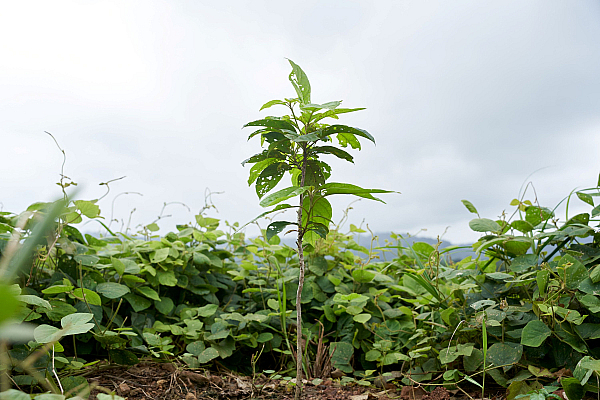
Liberia is the most forested country in West Africa, representing over half of the remaining rainforests in the region. Its forests account for approximately 42% of the Upper Guinean Forest of West Africa and are the largest remaining portion of this globally important forest area. The Upper Guinean Forest is recognized for its rich biodiversity and high number of endemic species.
According to Global Nature Watch (GNW) (https://apo-opa.co/4ypysaR), Liberia had 8.8 million hectares of natural forest in 2020, covering over 91% of its land area. GNW further indicates that the country lost 420,000 hectares of humid primary forest between 2002 and 2025 – a 10% decrease over the same period. The forestry sector contributes approximately 10% to Liberia’s annual GDP and directly employs around 10,400 people.
Recognizing the importance of responsible forestry in supporting both environmental and economic objectives, Gertrude Nyaley, Deputy Managing Director of the Forestry Development Authority (FDA), stated:
Responsible forest management and FSC certification can play a critical role in achieving Liberia’s sustainable development goals.
Gertrude Nyaley further emphasized the importance of partnerships in advancing sustainable forest management:
Collaboration between the government and FSC is crucial for the successful implementation of sustainable practices and the protection of biodiversity.
Supporting responsible management and legal compliance
FSC developed this new standard between July 2022 and July 2024 in line with its procedure for the development of interim national standards (https://apo-opa.co/3SzRRqz) (FSC-PRO-60-007 V1-2). The process included two stakeholder consultation workshops held in Monrovia, Liberia, on 16 August 2023 and online on 29 April 2024, as well as two 60-day public consultations conducted between February and July 2024.
With rising global requirements such as the EU Regulation on Deforestation-free Products (EUDR) (https://apo-opa.co/3UMyv20), the IFSS offers a practical tool for demonstrating compliance with both legal obligations and market expectations.
At the national level, it helps forest managers, companies and communities implement responsible forest management in line with Liberia’s legal and institutional framework, including the 1984 Constitution, the National Forestry Reform Law (NFRL) of 2006, and the Ten Core Regulations of the FDA of 2007.
The standard applies to all forest ownership types – state, community and private – and supports the full range of forest rights and licencing systems established under the NFRL, including forest management contracts, timber sales contracts and forest use permits.
At the international level, the IFSS supports Liberia’s commitments under agreements such as:
It also strengthens Liberia’s ongoing efforts under the Voluntary Partnership Agreement with the European Union signed in 2011, including the development of a timber legality assurance system.
Highlighting the broader importance of forest conservation in the context of climate change and sustainable trade, Gertrude Nyaley added:
Protecting Liberia’s forests is critical because they serve many purposes for humankind, especially in the face of global climate change. If we do not protect our forests, we risk so much on this planet. Through the FSC standard and group certification, even smallholders can come together to meet requirements, strengthen traceability, and ensure their products are responsibly sourced for international markets.
In this way, the new IFSS provides a practical framework to safeguard Liberia’s globally significant forests while supporting economic development, community livelihoods, and responsible access to international markets. By strengthening sustainable forest management and promoting responsible sourcing throughout the supply chain, the standard will help ensure that Liberia’s forests continue to deliver environmental, social, cultural, and economic benefits for generations to come.
Reflecting on the long-term responsibility of protecting these resources for future generations, Francis Nwah, representing the Liberian Ministry of Agriculture, concluded:
In Liberia, we say 'eat some and keep some'. Do not raid the forest for the coming generation. Our people live from the forest. For many in rural areas, it provides food, medicine, and holds cultural and spiritual value as a sacred place.
Effective date and access
For any queries on the development of the standard, please contact the FSC Country Requirements Programme at country_requirements@fsc.org.
Distributed by APO Group on behalf of Forest Stewardship Council.
MEDIA CONTACTS:
Israel Bionyi
Snr Regional Communications Manager
Africa and Middle East
i.bionyi@fsc.org
Africa Regional Office
Chiromo Road, ICEA LION Building Westlands
PO Box 10643, Postal Code 00100
Nairobi, Kenya.
Stevie Ruchelle Sianard Bidjoua
Market Development Officer
Congo Basin & West Africa
s.sianard@fsc.org
Congo Basin and West Africa Office
The Republic of Congo Office
2, Avenue de la Base (Immeuble LCB) – Angle Bd Denis Sassou Nguesso
Quartier Batignolles - Brazzaville / République du Congo
This website uses cookies.



