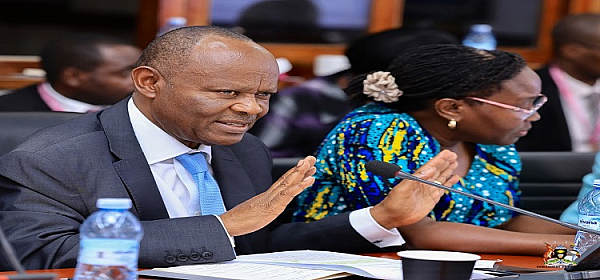
The Chairperson of the Health Service Commission, Dr Henry Mwebesa, told the House Committee on Health that the proposed rules arise from a presidential directive to establish a disciplinary framework for health workers similar to that governing the armed forces.
“The President directed that there should be standing orders for the health sector, just like it is for the army. Health workers will remain subject to the general standing orders of the Public Service, but there will be specific standing orders, especially regarding discipline,” Mwebesa said.
This was during the Health Committee’s introductory meeting with the Commission and the leadership of national and regional referral hospitals, on Thursday, 20 August 2026.
Mwebesa explained that disciplinary action under the existing Public Service procedures take between six months to one year, even in cases where negligence by a health worker results in the death of a patient.
“If a health worker, out of negligence, causes the death of a mother, you need six months to one year to discipline that person. Under the specific standing orders, we will not have to wait for six months to show you the exit,” he said.
The proposed standing orders will also address dual employment, requiring health workers to choose between serving the government or working with private or donor-funded institutions.
Other infringements to be covered by the standing orders include proceeding for further studies without obtaining official study leave.
Mwebesa asked the committee to support their plans to establish an assessment center at Butabika and wage to hire 1200 health workers while processing the 2026/2027 budget.
Legislators raised concerns about under staffing in various health facilities in their constituencies and failure to attract the right persons upcountry.
Hon. Miriam Mukhaye (NRM, Mbale District Woman Representative) proposed to the commission to team up with health training institutions in order to identify and attract competent personnel.
Hon. Bernard Otim (NRM, Maruzi North County) expressed concern for what he described as a rampant practice where staff have been made to act for long in acting capacity, saying it is unlawful.
“There are several staff who have served in acting capacity for more than six months. I hope that they are still receiving their allowances, and in case you advertise for the same jobs, they are given priority after acting for years,” said Otim.
The committee chairperson, Hon. Julius Monday, said the committee is set to meet heads of health training universities and other tertiary institutions to streamline issues related to staffing and recruitment.
“We for example want to project how many health workers we will be training in the next five years, in order to plan for internship payment and sort out issues including dual employment,” said Monday.
Distributed by APO Group on behalf of Parliament of the Republic of Uganda.
This website uses cookies.



